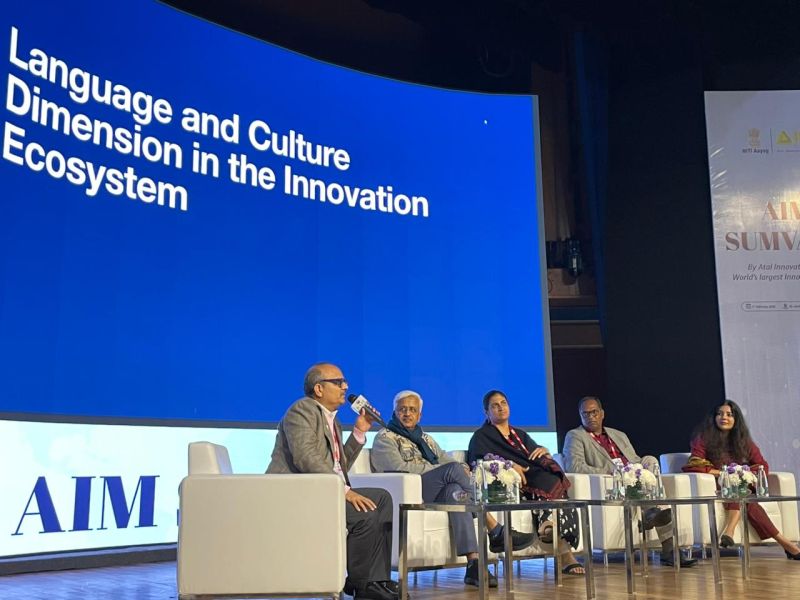
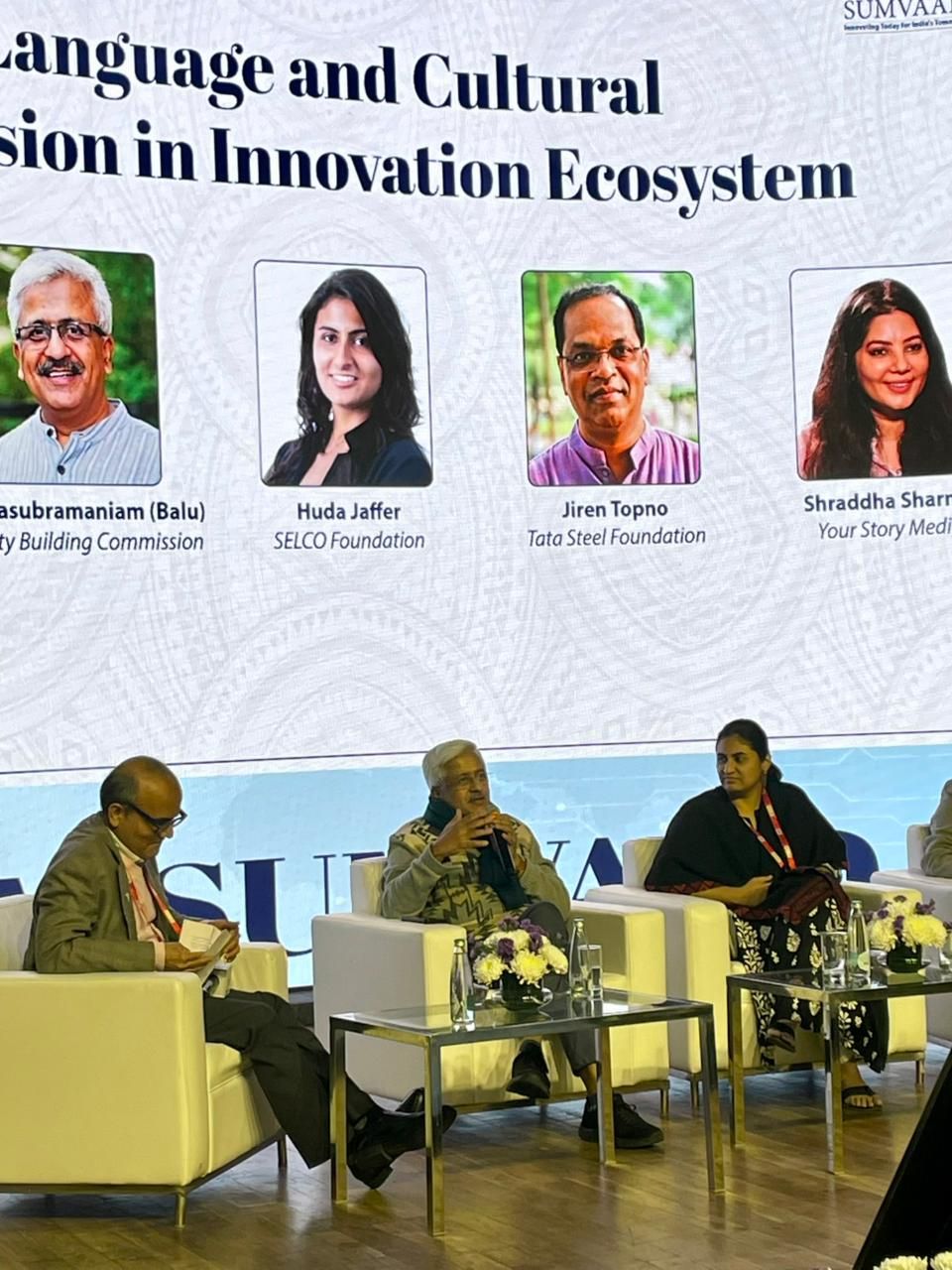
“Innovation should be built on community knowledge and wisdom” This thought-provoking insight from Dr. R. Balasubramaniam, Member (HR), Capacity Building Commission (CBC), resonated strongly at AIM SUMVAAD – the Annual AIM Incubator Conclave, held today at Dr Ambedkar International Centre, New Delhi. During the panel discussion on Language and Cultural Dimensions in the Innovation Ecosystem, Dr. Balasubramaniam emphasized a perspective often overlooked in mainstream innovation discourse, i.e., the deep-rooted indigenous knowledge systems of tribal communities. These systems, refined over centuries, demonstrate that innovation is not always created in laboratories or boardrooms; it is often embedded in lived experience, cultural practices, and community knowledge. He highlighted the importance of recognizing and valuing existing knowledge frameworks rather than attempting to impose modern models that may not align with local contexts. Sustainable innovation, he noted, emerges when new approaches are built upon and not substituted for traditional wisdom. The panel discussion aligned closely with the broader theme of language and cultural inclusivity in India’s innovation ecosystem. When incubation support, investment access, market linkages, and regulatory guidance are available primarily in English, a large segment of grassroots and vernacular innovators remains excluded. This exclusion is not only linguistic but deeply cultural, affecting whose ideas are seen, supported, and scaled. The panel moderated by Prof Chintan Vaishnav reinforced that India’s innovation ecosystem can become truly transformative only when it is multilingual, culturally grounded, and inclusive of diverse knowledge traditions.