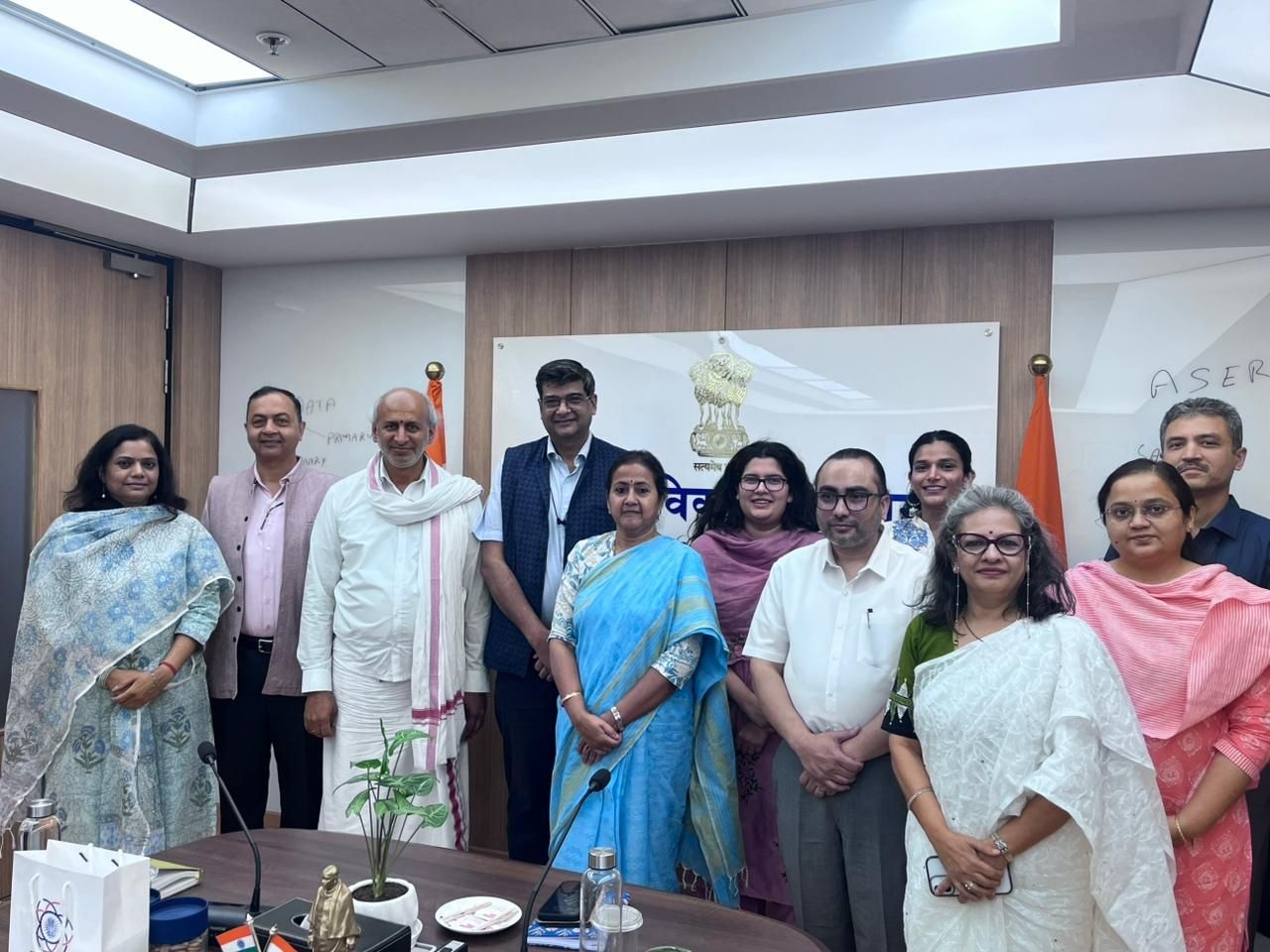
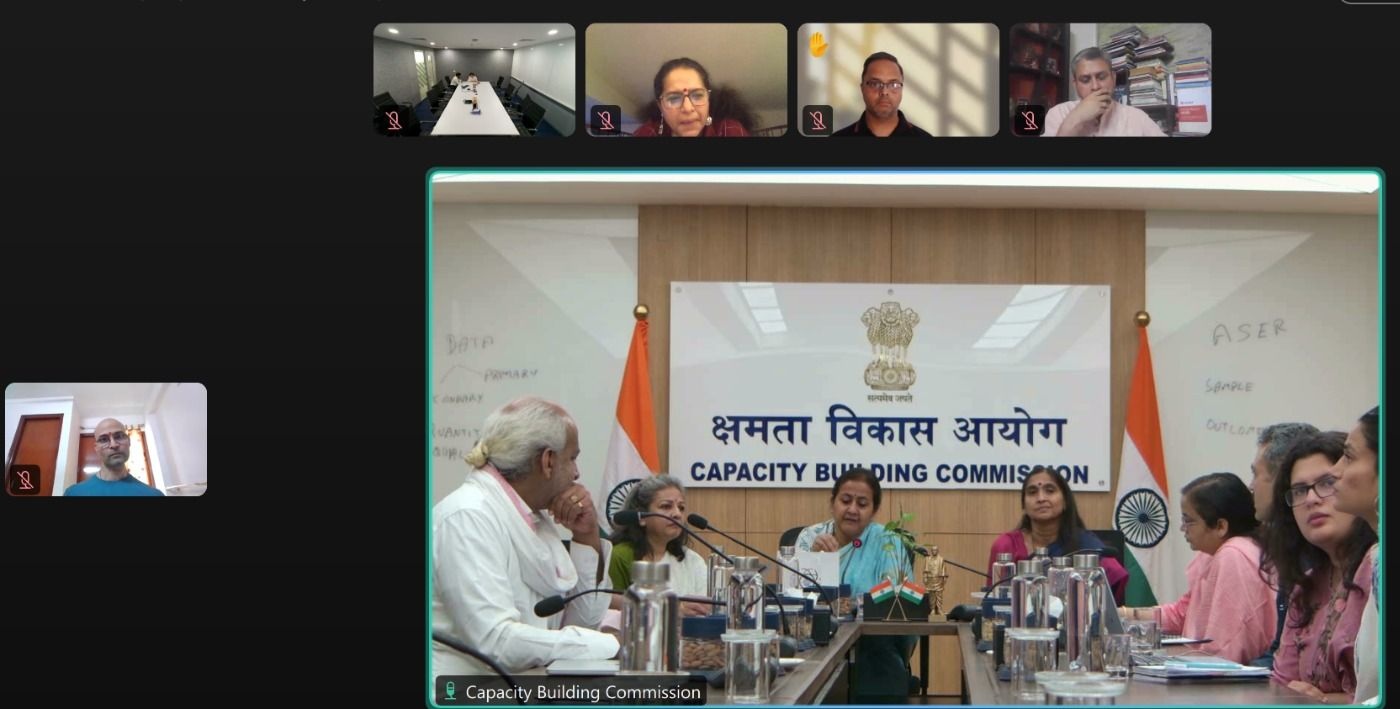
Capacity Building Commission, in partnership with the School of Ultimate Leadership (SOUL), convened a deliberative session on the design of Bharat KALP (Bharat Karmayogi Leadership Programme), with a special focus on embedding hashtag#IndianKnowledgeSystems (IKS) into the philosophy, pedagogy, and delivery of leadership development for public servants.
Chairperson, CBC, Smt. Radha Chauhan emphasized the need to reflect deeply on the kind of leadership required for a Viksit Bharat and whether our systems have truly nurtured karmayogis committed to citizen-centric governance and Jan Sewa. She highlighted the importance of grounding leadership in the ethos of “Nagrik Devo Bhava”, where public service is guided by integrity, responsibility, self-reflection, and a nation-first outlook.
The session, organized by the Quality Assurance Pillar of CBC led by Ms. Uma S., brought together distinguished experts and thought leaders including Shri Raghava Krishna (Brhat), Shri Ajay Viswanath (TAO Consulting), Dr. Anuradha Choudry (IIT Kharagpur), Shri Sai Susarla (Institute for Indic Knowledge Studies), Dr. K.E. Seetha Ram (ADBI Fellow), and Prof. K.Ramasubramanian (IIT Bombay) for a rich and reflective exchange on reimagining leadership in public service through an Indic lens.
Dr. Alka Mittal, Member (Admin), CBC, emphasized the importance of developing leadership capacities that are deeply rooted in values, self-awareness, and purpose, while remaining responsive to the evolving complexities of governance.
Shri Saurabh Johri, CEO, SOUL, and Shri Gaurav Mehta, Joint CEO, SOUL, presented the programme design and shared SOUL’s vision for nurturing action-oriented and purpose-driven public leaders through Bharat KALP.
Smt. Chhavi Bhardwaj, CEO, Karmayogi Bharat, also offered key inputs on strengthening the programme’s digital accessibility and enabling sustained engagement for effective public
leadership.
Shri Jagdeep Gupta, Secretary, CBC, along with all Pillar Heads of CBC, were also present during the discussions.
The deliberations explored how Indian Knowledge Systems can serve not merely as thematic content, but as the very substrate of the programme- shaping its concepts, methods, and experiential learning design. Discussions covered themes such as complexity leadership,
Dharma and ethics in governance, Indian psychology, Panch Kosha-based leadership development, embodied learning, reflective inquiry, and the role of civilisational wisdom in navigating contemporary governance challenges.
Capacity Building Commission, in partnership with the School of Ultimate Leadership (SOUL)